
South East Asia
Chris has worked extensively throughout South East Asia on aid development projects with the NZAID, AUSAID, the World Bank and the Asia Development Bank (ADB).
Click on a tab below to see some of the projects Chris has been involved in.

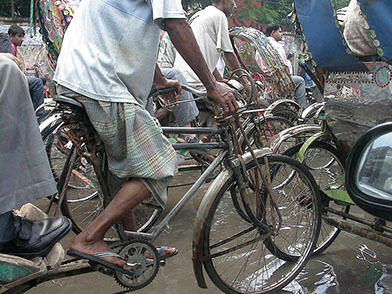
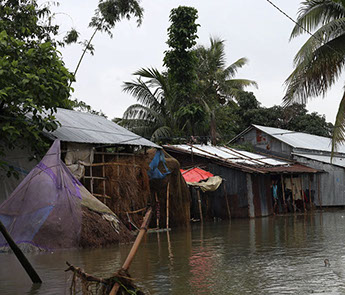
+ Teacher Quality Improvement in Secondary Education - Bangladesh
The goal of the Project was to enhance the quality of secondary education in Bangladesh secondary schools by improving the total quality (TQ) of teaching. The purpose provided quality initial and in-service teacher training, including continuing professional development, to all eligible teachers of grades 6-10 in government and private secondary schools in Bangladesh. The Project included the following four components:
(i) Improving teaching quality through organizational development and capacity building;
(ii) improving teacher training facilities;
(iii) Strengthening in-service and pre-service teacher training;
(iv) Improving equitable access and community involvement.
The TQ project was a complex multi-stakeholder and multi-component Secondary Education sector reform programme. This project aimed to facilitate sustainable quality improvements within the Secondary Education system of Bangladesh through systemic and institutional realignment. The aim of TQI is to improve the quality of learning through a massive upgrading of teacher qualifications, including, systemic and institutional changes.
The goal of the Project was to enhance the quality of secondary education in Bangladesh secondary schools by improving the quality of teaching. The purpose was to provide quality initial and in-service teacher training, including continuing professional development, to all eligible teachers of grades 6-10 in government and private secondary schools in Bangladesh.
+ Teacher Training and Revised Early Childhood Curriculum for Ethnic Minorities in Vietnam Central Highlands - Vietnam
The 6 month project involved formulating a coherent and detailed project design document for NZAID to support early childhood and post early childhood education in Gia Lai province, Vietnam. The project included the infrastructure needs and equipment to be financed in the framework of the project implementation.
The overall objective of the mission was the formulation of a project of support in Gia Lai province to improve the early childhood and post early childhood education in three areas: access, quality and teacher training. The specific objectives were to:
• Ascertain the current context of early childhood and post early childhood education in Gia Lai province, including the infrastructure and equipment for early childhood and primary education.
• Ascertain the current deficit in infrastructure and human resources given to early childhood education in Gia Lai.
• Review thoroughly all relevant NZAID policies, strategies and documents relating to the education sector including NZAID's in-house identification of options for support to basic education in Gia Lai province;
• Review relevant government and donor-funded programmes and projects to assure that recommendations for future action do not overlap other initiatives undertaken by other donors. It will be noted that NZAID has already covered part of this work, and it will be important to take advantage of what has already been done and not duplicate the collation of background information.
• Visit relevant authorities, donors, implementing agencies and operational projects in Hanoi and Gia Lai province to identify their actual implementation strategies and issues, and to gain a realistic operational view of their implementation plans at different terms (short, medium or long term). Again, the mission will take account of the results of NZAID's in-house identification document in order to propose precise areas of intervention and elaborate clear, concrete activities for each project component.
• Assess, on the basis of the past and present interventions such as Targeted Budget Support for EFA, UNICEF's Early Childhood Development Programme, international NGO initiatives in early childhood care and education and NZAID's ECCE project in Binh Dinh province, how the achievements of these interventions can be built upon in a manner compatible with the priorities and policies of the Government of Vietnam and NZAID's policies and strategies;
• To formulate a monitoring and evaluation framework for NZAID's support to early childhood education and post early childhood education in Gia Lai province. Baseline indicators to be included in the logical framework will be developed based on the outcomes of the data-gathering mission and the work undertaken in the design mission.
+ Social Surveys Of Ethnic Minorities - Nepal
i) Analysed the potential barriers that the disadvantaged groups face in participating in, and benefiting from, the Project and recommended a strategy to adequately cover these groups, including girls, the poor and ethnic minorities.
ii) Conducted comprehensive benchmark short surveys across Nepal designed to collect information on ethic minorities calibrated against the Knowledge, Attitude and Practices Survey implemented on a smaller scale regarding communities’ attitudes to formal schooling as well as basic education provision in remote communities’ knowledge and behaviors.
iii) Panel Surveys using the same group of respondents for two subsequent surveys were conducted to coordinate with other population-based surveys during the course TA project. Surveys were designed to obtain specialized information from population subgroups that included men and young adults.
iv) The social assessment survey of ethnic minorities and disadvantaged groups in two districts, Sunsari in the East Tarai and Tanahun in the Western Hills, revealed the need for making education a relevant and integral part of the lives of disadvantaged groups, providing adequate physical accommodation for disadvantaged children, and making provision for female teacher of similar ethnic background or belonging to disadvantaged groups, skill learning programmes for girls, adults and women to mitigate social and economic barriers to the education of disadvantaged children. The integration of a life skills component in the basic education package for the disadvantaged groups and its effective implementation had a far-reaching impact on their life styles. TA provided strategies for future development of education and economic policies in disadvantaged communities.
+ Training of Teacher Trainers Joint Feasibility Design Study - Nepal
The key objective of the project was to assess the feasibility of establishing a ‘Training of Teacher Trainers’ programme for the training of trainers in general teaching skills in English language for the Solu Khumbu region in Nepal. The study focussed particularly on the delivery of these skills through the Solu Khumbu Multiple Campus and the likely developmental impacts of such a programme.
Discrete outputs and objectives of the study were to:
• lift the quality of primary education provision;
• recommend a two tier teacher training model based in formal and non-formal provision;
• provide feasibility information on establishing a teacher training programme based on the NCED Basic Teacher Training package
• develop feasibility data on establishing local school cluster groups
• link the feasibility design study with Nepal Government’s teacher training initiatives and policy of decentralisation.
+ Institutional Strengthening and Capacity Building of TVET Institutions - Philippines
This project was conducted with three TVET institutions in the Laguna province. Specific TOR were:
• Analysis of the market and industry needs of automotive and electronics education in Laguna
• Develop appropriate competency-based curricula to meet industry needs
• Review training equipment needs
• Train tutors in delivery of new curricula and in teaching techniques
• Assess further programme development and quality assurance systems for the institutions.
+ Maldives Employment Skills Training Project - Maldives
The project is delivered in three geographical regions: the island of Male’ and the adjacent atolls, the Northern Development Region, and the Southern Development Region, where regional development activities are ongoing. The goal of the project is to increase the number of Maldivians, men and women, actively participating in the labour force and employed. The project provides more employment-oriented skills training in tourism, fisheries and agriculture, transport, construction and the social sectors (health & education) and improves the capacity to develop and deliver Community Based Skills Training (CBST).
+ Feasibility Study on the Development of a Tourism and Hospitality Institution - Vietnam
To study the feasibility of developing a tertiary level institution to deliver courses in tourism and hospitality in Hanoi, Vietnam. The study included:
• Assessment of present delivery systems.
• Assessment of future industry requirements.
• Review of type of courses curriculum required.
• Assessment of the availability of qualified trainers
• Staff training requirements.
+ Training Needs Analysis of the Greater Mekong Sub-region - Mekong Region
A Training Needs Analysis (TNA) to provide a better understanding of the priority training needs of people living and working in the public, non-governmental and business sectors of the six Greater Mekong Sub region (GMS) countries. The TNA assessed capacity building requirements in the GMS countries to improve development policy, planning, management and practice to assist these countries to achieve their poverty reduction targets and their economic growth and development goals. The study addressed the status of cooperation in HRD in the sub region. The completed TNA provided a sound basis to enable development agencies and the Mekong Institute to better target priority HRD needs as identified by the intended beneficiaries.
+ Development of Tourism Management Education and Training - Vietnam
Two projects in 1994 and 1995 - Tourism Management Education and Training in Central Viet Nam as a commercial venture
Tasks included:
• Consultation with senior Government officials, managers of hotels, and establishment of partnership with the University of Hue
• Training needs analysis report on short, medium and long term training needs
• Development of a joint venture programme including financial viability